Data only helps when people understand it. We study how to present complex data clearly, through dashboards, charts and maps that reveal trends, patterns and anomalies, and how to tell whether such a visualization is really well designed.
A dashboard brings everything important together on a single screen, so that the state of a system, a company or a city can be understood at a glance. That only works when the screen is well designed, so our first question was whether the quality of a dashboard can be judged automatically. We started by analysing dashboards as images, pixel by pixel 1, and then learned to break a screen down into its parts and measure how they are arranged 234. To find out which design rules really matter, we generated large sets of realistic-looking dashboards and tested the metrics on them 567.
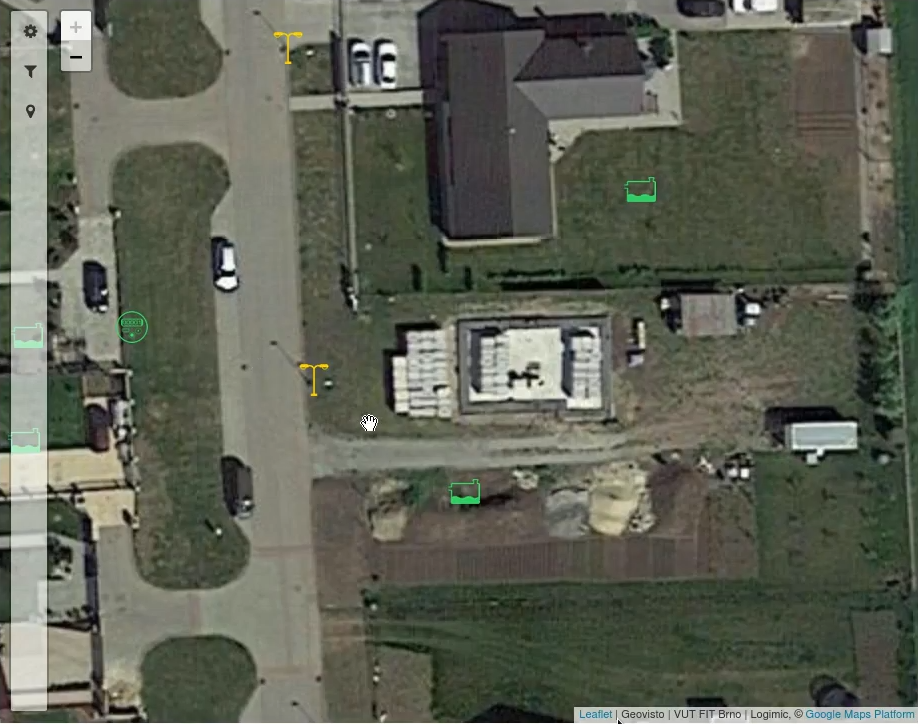
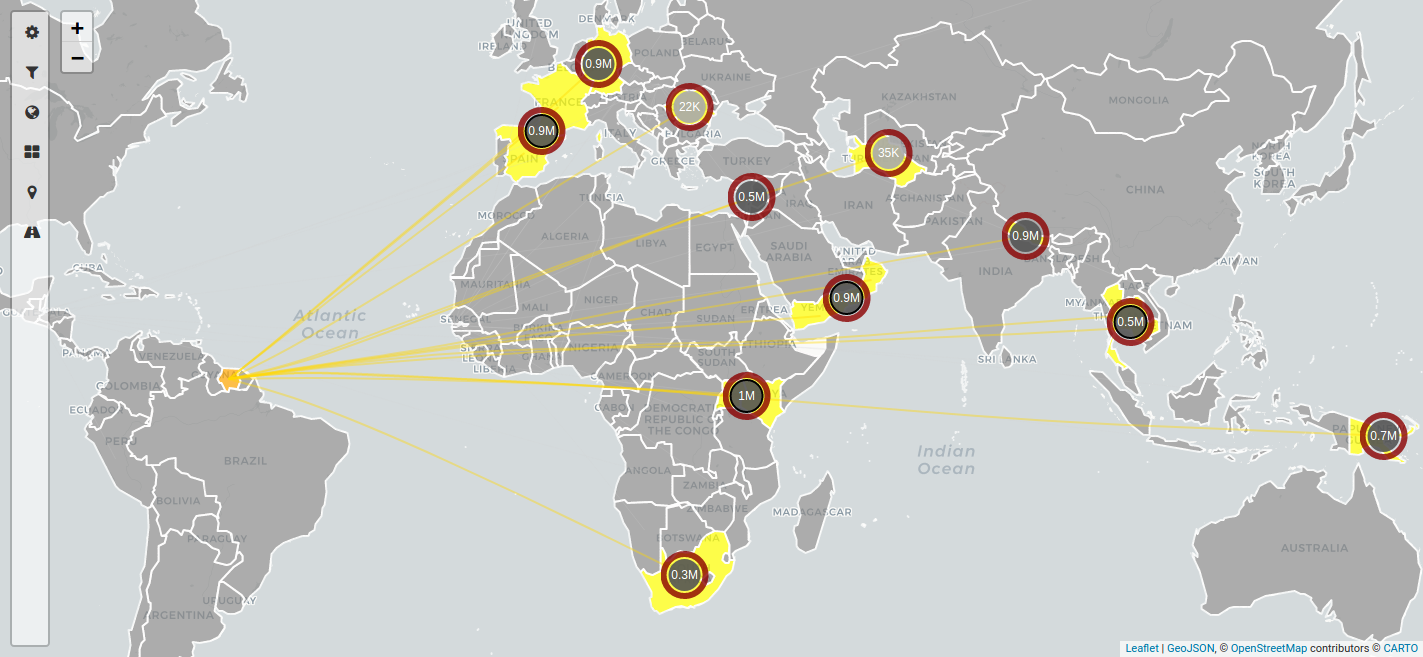
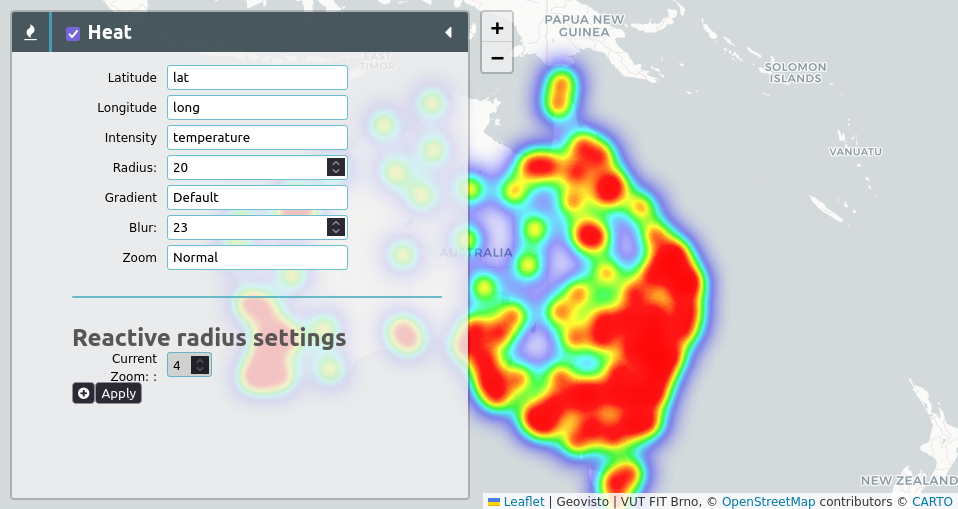
Maps soon became our main interest. Students visualized national statistics and, together with Flowmon, network traffic and security incidents 891011. The map of network traffic gave rise to Geovisto, a toolkit that lets non-programmers build interactive maps in the browser and gives developers an extensible API 12. Over the following years students turned it into a full library: they taught it to show time series, hierarchical data and custom objects 13141516, added tools for managing visualizations and geographic objects 1718 and made it easier to use, test and build into other applications 19202122. In industry it has been used, for example, to monitor IoT sensors 23.
Theses keep bringing visualization to new domains, from industrial halls with Honeywell 24 to psychological diagnostics 25 and council voting 26. Most visualizations, however, now grow out of the work on mobility and transport, the Internet of Things and open data.
For more complex geographic visualizations we have recently also been using ArcGIS, working with Arcdata Praha, its distributor in the Czech Republic. An example is the ArcGIS StoryMap by Jan Kvapil on analysing the quality of public transport networks with GTFS and open data, a finalist of the application competition at the Esri GIS Conference 2026.