Cities and regions publish more and more data, from council votes to budgets and statistics. Open data only helps when people can use it, yet it comes in many formats, its quality varies and there are few tools to follow the decisions of our representatives. Making such data useful calls for applications developed together with the municipalities that publish it.
Local councils decide about schools, transport or housing, yet their decisions get far less attention than national politics. Student projects made national statistics, pet registrations and participatory budgeting easier to explore 123, and a visualization of how the Brno City Council votes 4 showed how much voting data can tell. Every municipality publishes its votes in a different format, so we proposed a common data model for them 5, together with a tool that converts the data into it 6. The same approach works for many municipalities and regions as well as for both chambers of the Czech Parliament 78, and it even allows comparing the Czech and Slovak parliaments 9. Making such data really accessible, however, takes more than a chart: it needs an open API, manageable data sources, reusable visualizations, notifications about new votes and, above all, an interface that is easy to use 10111213141516.
Open data can also support the everyday decisions of a city. For Brno we studied where to open a retail store with the help of geospatial analysis 171819; other theses show how temperature and air quality change across the city 20 or what the participatory budget, traffic events and crime data of the City of Most reveal 212223. We also evaluated how much open data Czech regions actually publish 24.
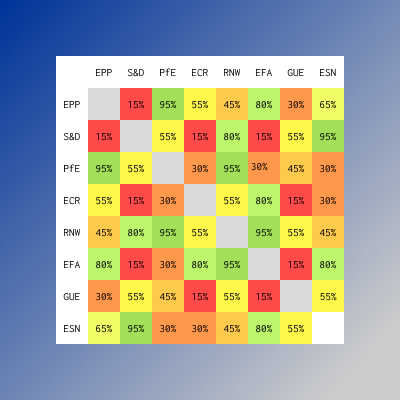
Votes are only a small part of what municipalities publish. Most of their work is recorded in documents, such as agendas, minutes, resolutions or tenders, which used to be too laborious to process at scale. Natural language processing and large language models have changed that, so we increasingly focus on the documents of municipalities in general. We use a language model to sort the agenda items of council meetings into topics, so that people can follow what their council deals with, not only how it votes 2526, and we analyse voting in the European Parliament 2728. Documents also make it possible to recommend public tenders worth taking part in 29.